Faculty
Professors of Physics
-
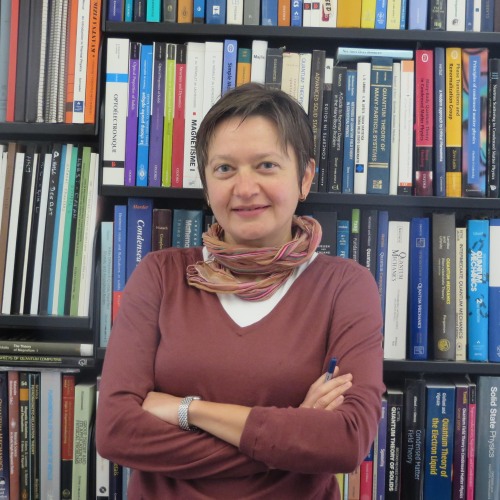
Vesna Mitrović
Department Chair, L. Herbert Ballou University Professor of Physics & EngineeringBarus & Holley 402 / Barus & Holley 337Professor Mitrović is an experimental condensed matter physicist. Her research interests include the study of quantum phenomena arising in strongly correlated electron systems at low temperatures and high magnetic fields using magnetic resonance techniques.
-
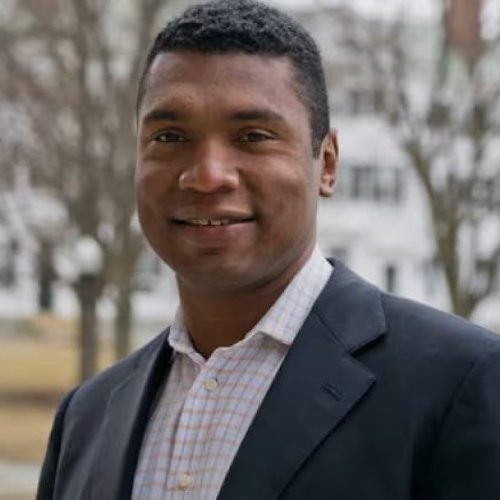
Stephon Alexander
Barus & Holley, 506Professor Alexander is a theoretical physicist specializing in the interface between cosmology, particle physics, and quantum gravity (String Theory and Loop Quantum Gravity).
-
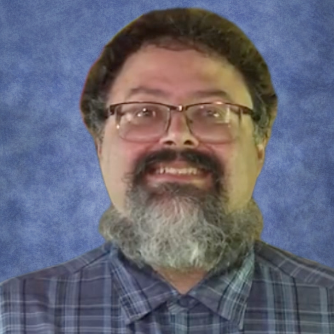
Ian Dell'Antonio
Professor Dell'Antonio's research centers on observational cosmology, the experimental measurement of the fundamental properties of the universe.
-
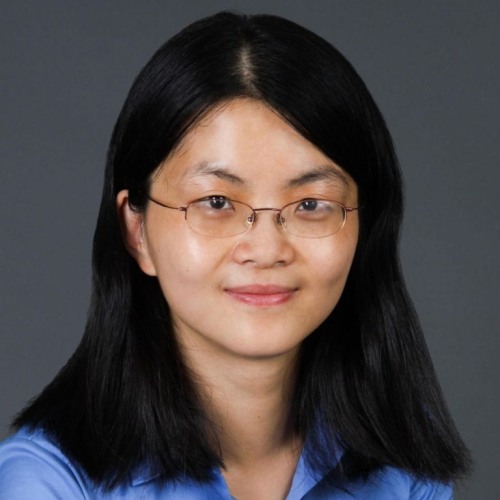
JiJi Fan
Barus & Holley 529Professor Fan works on particle theories, particularly beyond Standard Model theories such as Higgs phenomenology, supersymmetry, dark matter models and signatures.
-
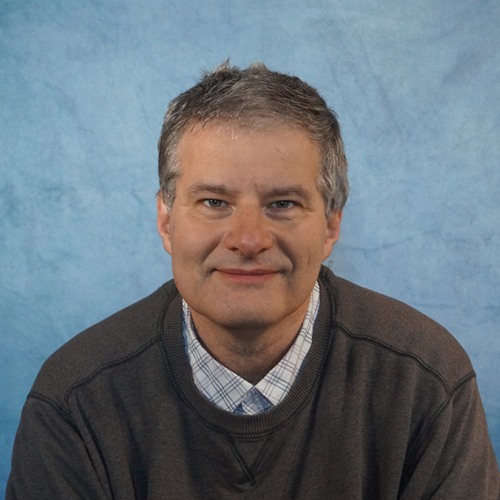
Dmitri Feldman
Professor of Physics, Director of Graduate Studies (Spring 2027)Professor Feldman handles all Ph.D. program and student issues, including degree requirements and milestone completion, transfer credit, etc.
Professor Feldman is a theoretical condensed matter physicist, with emphasis on strongly correlated electronic low-dimensional systems, topological solids, and quenched disorder in hard and soft condensed matter.
-
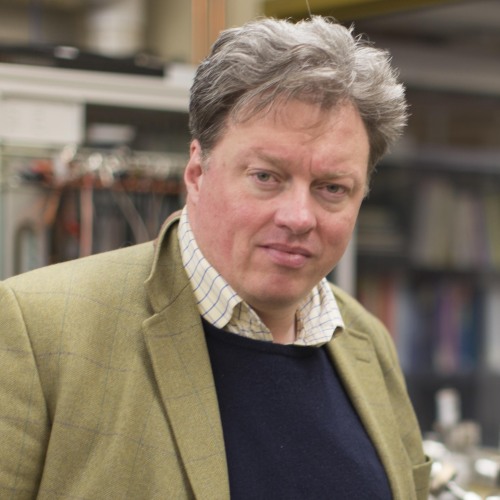
Richard Gaitskell
Barus & Holley 516Professor Gaitskell leads a research team hunting for direct evidence of particle dark matter. His group is working on an experiment, LUX, that has the world's most sensitive dark matter detector located in the underground laboratories in the Sanford Lab, South Dakota.
-
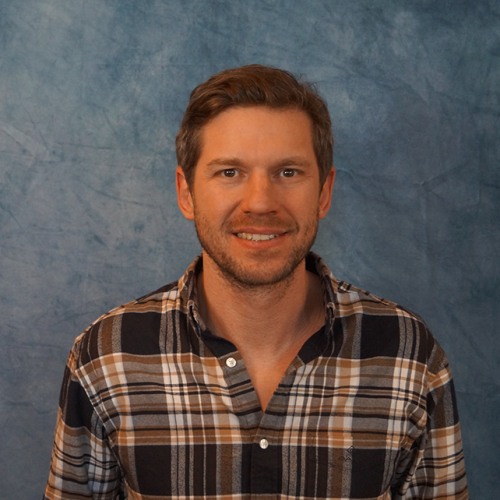
Loukas Gouskos
Barus & Holley 504Professor Gouskos specializes in experimental particle physics, with a primary focus on studying the properties of the Higgs boson and searching for physics beyond the standard model. Leveraging cutting-edge Deep Learning techniques, his research extends to diverse areas within particle physics.
-
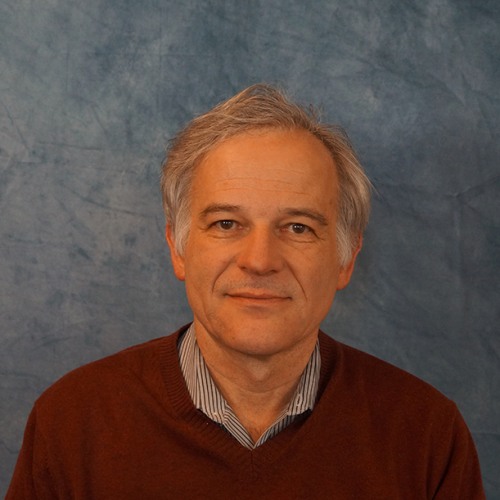
Ulrich Heintz
Barus & Holley 510Professor Heintz is an experimental physicist studying the fundamental building blocks of matter. His interest is in testing the validity of the standard model of elementary particle physics at very high energies.
-
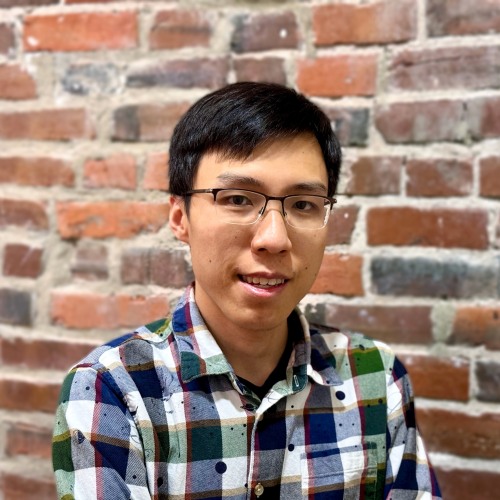
Aaron Hui
Barus 203Professor Hui is a theoretical condensed matter physicist. He studies strongly correlated and topological systems, with an emphasis on electron transport and phase transitions.
-
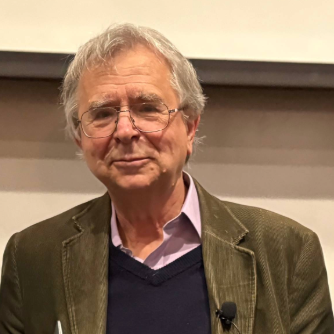
Antal Jevicki
Barus Building (340 Brook Street), 115Professor Jevicki's research is in quantum field theory focusing on string theory, quantum gravity, black holes, non-perturbative and collective phenomena.
-
Savvas Koushiappas
Professor of Physics, Director of Graduate Studies (Fall 2026)Professor Koushiappas' theoretical work is in the interface between cosmology and particle physics. His work is predominantly in the area of dark matter physics and the search for the nature of the dark matter particle from an experimentally-motivated theoretical perspective.
-
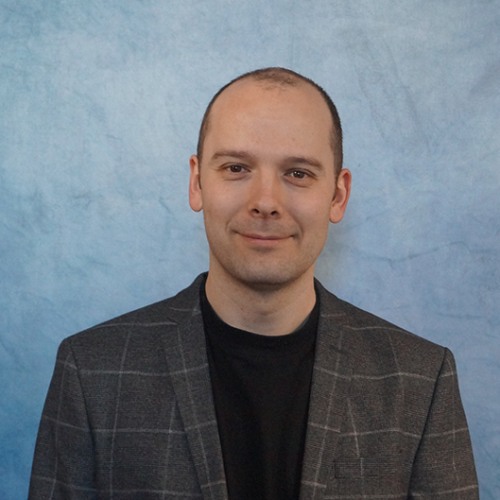
Matthias Kuehne
Assistant Professor of Physics, Christopher M. Barter Assistant Professor of PhysicsBarus & Holley 718Professor Kuehne is an experimental condensed matter physicist. He investigates electronics, ionics, and fluidics in low-dimensional materials and devices.
-
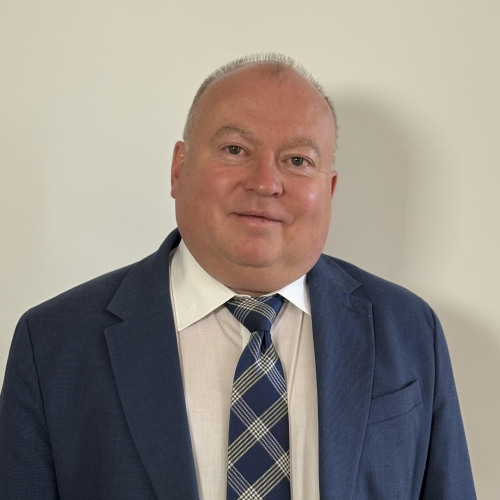
Greg Landsberg
Barus & Holley 526Professor Landsberg's experimental research is in broad areas of beyond the standard model and Higgs physics, including exotic Higgs boson decays, searches for dark matter, supersymmetry, exotic particles, extra spatial dimensions, and black holes.
-
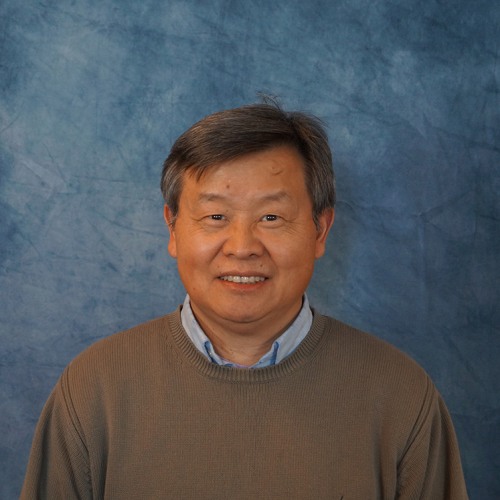
Xinsheng Sean Ling
Barus & Holley 710Professor Ling is an experimental condensed matter physicist. His current research interests are in defect dynamics and glassy behavior in colloidal matter. He also has longstanding interests in the effects of impurities and fluctuations in superconductors.
-
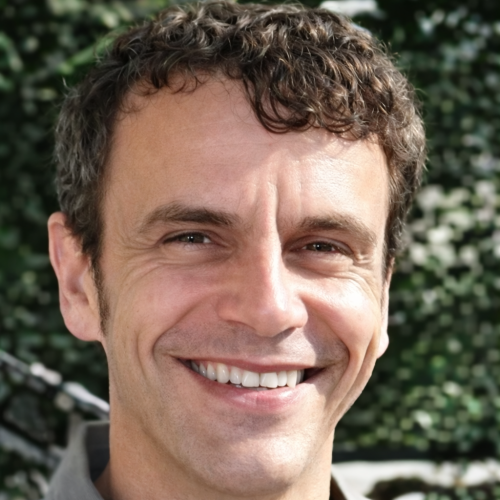
David Lowe
Barus & Holley 549Professor Lowe is a high-energy theorist who primarily studies fundamental questions in quantum gravity of relevance to black holes and quantum cosmology.
-
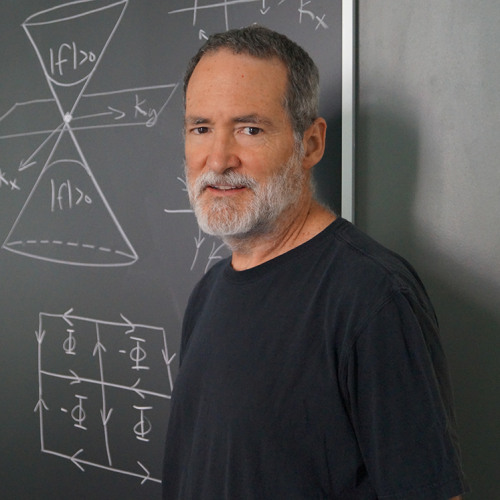
Brad Marston
Professor of Physics, Harrison E. Farnsworth Professor of PhysicsBarus Building (340 Brook Street), 205Professor Marston is a theoretical condensed matter physicist. His research focuses on the non-equilibrium statistical physics of atmospheres and oceans for the purpose of understanding climate and climate change. He also studies strongly correlated electronic systems.
-
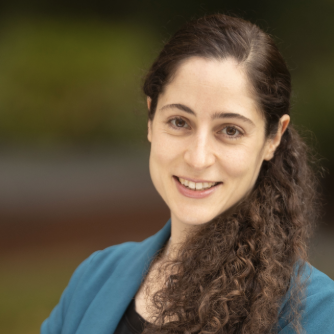
Leenoy Meshulam
June and Howard Zimmerman Assistant Professor of Physics, Neuroscience and Brain ScienceBarus Building 201Professor Meshulam is a theoretical biological physicist who seeks the physical principles by which large-scale neural dynamics—and more broadly, living processes—give rise to computation and behavior. She develops models that connect microscopic interactions to emergent function, drawing on ideas from statistical physics such as renormalization-group theory, maximum-entropy modeling, and information theory. Working closely with experimentalists on systems ranging from mammalian brain circuits to the color-shifting skin of octopuses, her group turns high-resolution data into quantitative, testable laws of living, thinking matter.
-
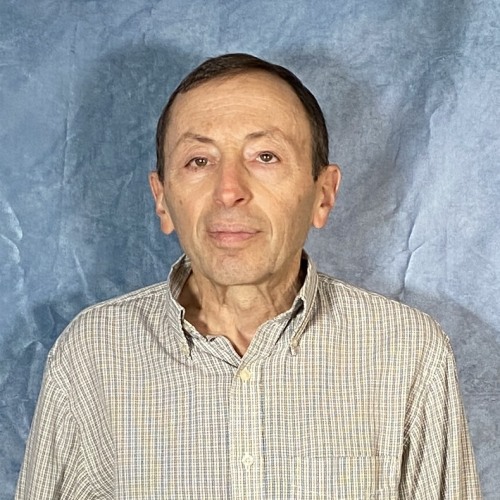
Robert Pelcovits
Barus & Holley 333Professor Pelcovits is a theoretical condensed matter physicist. His research focuses on the physics of liquid crystals and topological defects, dynamics, and self-assembly in biological systems, using numerical simulations and visualizations.
-
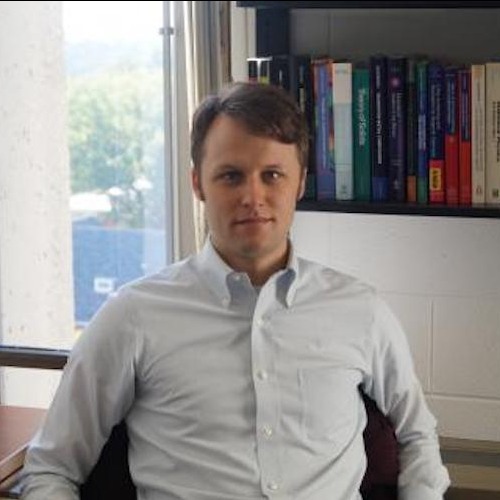
Kemp Plumb
Professor Plumb handles all Sc.M. program and student issues, including admission, advising, degree requirements, etc.
Professor Plumb is an experimental condensed matter physicist. He uses neutron and x-ray spectroscopies to discover new collective electronic and magnetic phenomena arising in quantum materials.
-
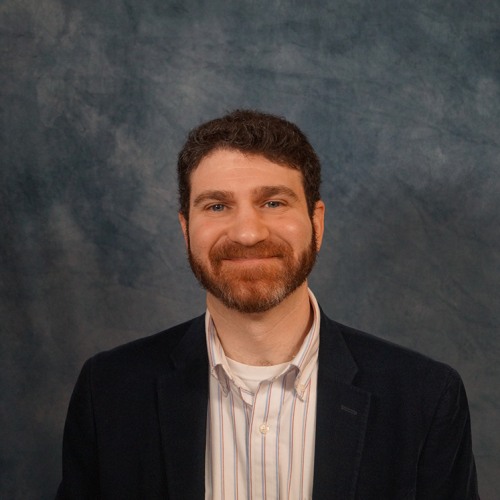
Jonathan Pober
Barus & Holley 518Professor Pober is an experimental astrophysicist. His research focuses on the history of the universe through observations of neutral hydrogen on cosmic scales. He develops ultrasensitive radio telescopes for his astronomical observation.
-
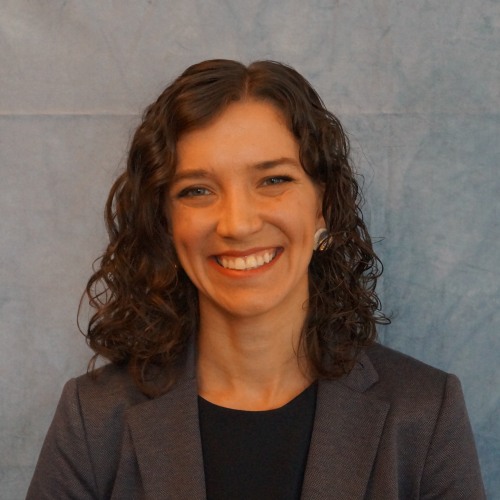
Jennifer Roloff
Barus & Holley 524Professor Roloff is an experimental particle physicist working on the CMS experiment. Her work focuses on precision tests of QCD, searches for physics beyond the Standard model, and novel reconstruction and calibration methods for jets.
-
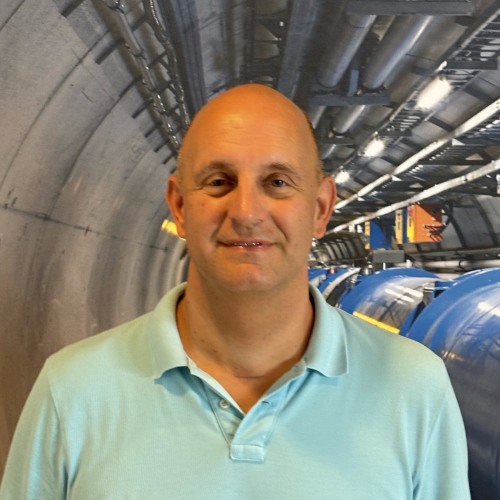
Marcus Spradlin
Barus & Holley 531Professor Spradlin is a theoretical high-energy physicist, working on string theory, quantum gravity, and mathematical aspects of quantum field theory.
-
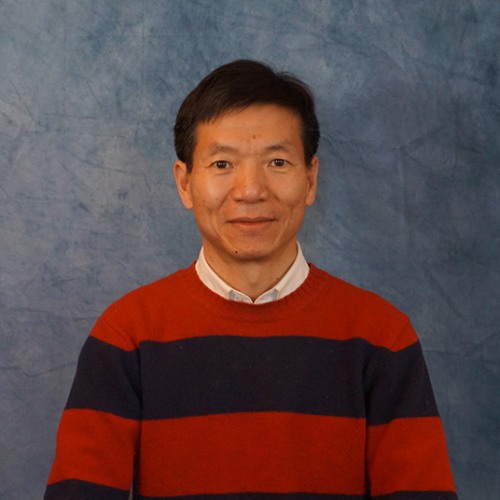
Jay Tang
Barus & Holley 702Professor Tang is an experimental biological physicist. His research focuses on cell mechanics and mobility and addressing outstanding questions on morphology, pattern formation, force generation and mobility of bacteria and other cells.
-
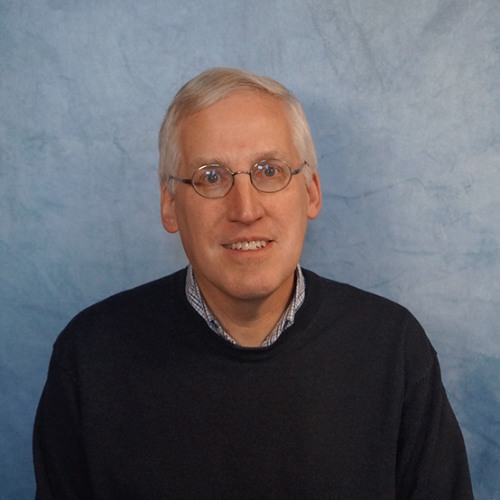
Gregory Tucker
Barus & Holley 520Professor Tucker is an experimental astrophysicist. His cosmology group studies the universe by measuring the cosmic microwave background (CMB) and by intensity mapping of neutral hydrogen. He is also interested in measuring the characteristics of exoplanets.
-
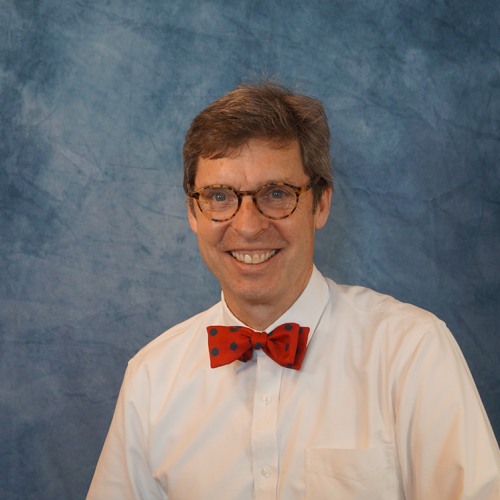
James Valles, Jr.
Barus & Holley 722Professor Valles is an experimental condensed matter physicist. He studies superconductivity and electron correlation effects in disordered metals and nanostructures. He also investigates effects of strong magnetic fields in cell biology and bio-polymerization.
-
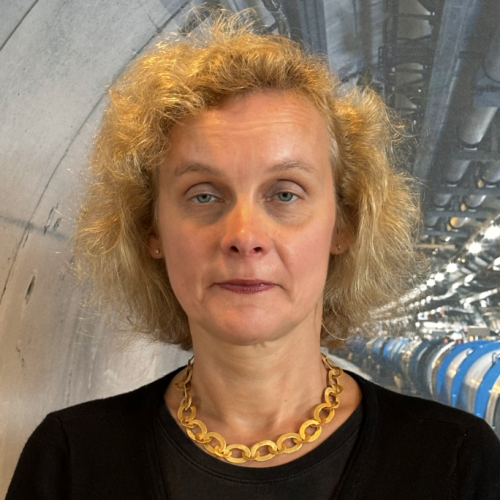
Anastasia Volovich
Professor of PhysicsProfessor Volovich works on theoretical physics: quantum field theory, general relativity, string theory and related areas in mathematics.
-
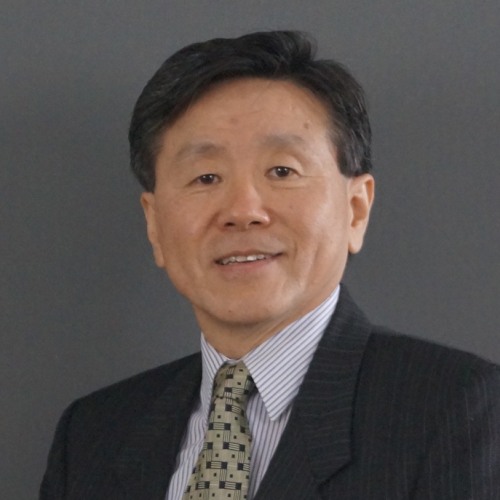
Gang Xiao
Barus & Holley 720Professor Xiao is an experimental condensed matter physicist, focusing on nanoscale physics and devices. He studies spin-based electronic systems, electron transport in low dimensional systems, and magnetism in artificial and self-assembled systems.
Research Faculty
Assistant Professors (Research)
-
Gaetano Barone
Assistant Professor of Physics (Research) -
Matt LeBlanc
Assistant Professor of Physics (Research) -
Adrien Rosuel
Assistant Professor of Physics (Research)
Distinguished Senior Research Scientist
-
Gabriele Benelli
Distinguished Senior Research Scientist
Senior Research Associates
-
Pushkaraj Joshi
Senior Research Associate -
Andrei Korotkov
Senior Research Associate
Research Associates
-
Jingyu Luo
Research Associate -
Spandan Mondal
Research Associate -
Jan Offermann
Research Associate -
Marko Stamenkovic
Research Associate
Visiting and Adjunct
Joint and Affiliated Faculty
-
Lucas Caretta
Assistant Professor of Engineering and Physics -
Carina Curto
Professor of Computational Neuroscience, Applied Mathematics and Physics -
Daniel Mittleman
Professor of Engineering and Physics -
Arto Nurmikko
Professor of Engineering and Physics -
Domenico Pacifici
Associate Professor of Engineering and Physics -
Thomas Powers
Professor of Engineering and Physics -
Brenda Rubenstein
Professor of Chemistry and Physics -
Richard Stratt
Professor of Chemistry and Physics -
Jingming Xu
Professor of Engineering and Physics -
Alexander Zaslavsky
Professor of Engineering and Physics -
Rashid Zia
Professor of Engineering and Physics
Adjunct Faculty
-
Oludurotimi Adetunji
Adjunct Assistant Professor -
Miquel Dorca
Adjunct Lecturer -
Jan Tobochnik
Adjunct Professor of Physics
Visiting Faculty
-
Luka Lambrecht
Visiting Research Associate -
Jia (Leo) Li
Visiting Associate Professor of Physics -
Yong P. Chen
Visiting Professor of Physics, Villum Investigator and Professor at the Department of Physics and Astronomy at Aarhus University
Emeritus
In Memoriam
-
-
Charles Elbaum
Professor EmeritusProfessor Elbaum received the Master's and Ph.D. degrees from the University of Toronto. He was a Research Fellow at the University of Toronto and at Harvard University before joining the faculty at Brown University in 1959. He then also conducted research at the University of Paris. Professor Elbaum was a frequent advisor to government and industrial research laboratories and was a Fellow of the American Physical Society. Professor Elbaum served as Chairperson of the Physics Department from 1980 to 1986. In 1991 he was appointed the Hazard Professor of Physics.
-
Peder Estrup
Professor EmeritusPeder Jan Estrup, age 94, Professor Emeritus of Chemistry and Physics and Dean Emeritus of the Graduate School and Research, passed away on Thursday, September 18, 2025.
Professor Estrup was born in Copenhagen, Denmark, and published over 100 papers, receiving numerous awards and accolades. The Nobel Prize Committee invited him to submit proposals in both chemistry and physics.
-
Herbert Fried
Professor EmeritusProfessor Herbert Fried joined the department in 1964, specializing in functional methods developed by Schwinger and others. According to his obituary, he authored four books and approximately one hundred and forty scientific papers. He knew personally many twentieth-century physics luminaries including Robert Oppenheimer, Freeman Dyson, and, especially, Julian Schwinger. He lectured and performed research in university departments and institutes throughout the world, principally in Paris, Marseille, and Nice, and was Director of the Workshops on Non-Perturbative Quantum Chromodynamics at the American University of Paris and La Citadelle of Villefranche-sur-mer. He continued active research throughout his life, completing his fourth book in 2014 at age 84 and publishing scientific papers well into his 90s.
-
Gerald Guralnik
ProfessorProfessor Gerald S. Guralnik, a revered member of the Brown faculty for 47 years whose theoretical work helped complete the Standard Model of particle physics, died Saturday, April 26, 2014. He was 77.
Guralnik, the Chancellor’s Professor of Physics at Brown, was a leading theorist in the field of elementary particle theory and made enduring contributions to the understanding of mass in the universe.
-
Kyungsik Kang
ProfessorProfessor Kyungsik Kang died on Monday, May 8, 2006. He graduated from Seoul National University in 1959, where he received the SNU President's Award (Gold Medal). He then received the Ph.D. degree from Indiana University in 1964. A physics professor for 41 years, Prof. Kang retired from teaching in 2005.
Professor Kang's influence extended beyond national borders. He was a fellow of The American Physical Society, The Korea Academy of Science and Technology, the Korean Association for the Advancement of Sciences, and the Korean Physical Society. His international recognition was further solidified by his service as president of the Seoul National University Alumni Association in New England and the National Association of Korean Schools. He served on the board of directors for the R.I. Korean American Association, the Korea-U.S. Science Cooperation Center and was a council member of the Advisory Council for Democratic and Peaceful Re-Unification of Korea. Prof. Kang was awarded The Cameliia Medal (Legion of Honor) from the Government of Korea, an Official Citation from the State of RI, and the Honorary Citizenship Award (as an Exceptional Overseas Korean) from The Metropolitan Government of Seoul, Korea.
-
Robert Lanou
Professor EmeritusProfessor Robert Lanou passed away on August 17, 2026. He was a member of the Brown faculty since 1959, Professor Lanou was a Fellow of the American Physical Society and the American Association for the Advancement of Science. He was previously on the staff of the University of California, Berkeley, a Visiting Fellow in the Italian National Universities at Padua and Bari, FNAL, Osaka University, Japan, and the Center for Particle Astrophysics (Berkeley). He had served on the High Energy Physics Program Advisory Committee of several National Laboratories, as well as the Executive Committee of the A.P.S. Division of Particles and Fields. He was a graduate of Worcester Polytechnic Institute and received the Ph.D. from Yale University. Professor Lanou was Chairman of the Physics Department from 1986 -1992.
-
Humphrey Maris
Professor EmeritusProfessor Humphrey John Maris, 86, passed away on July 28, 2025. Born and raised in England, he earned a Ph.D in physics at Imperial College, London in 1963 and moved to the United States shortly after.
Professor Maris joined the Brown Department of Physics faculty in 1965, where he remained until his retirement in 2014. For his research, he received many awards, including Brown's inaugural Impact Award for being the most successful inventor in Brown University history.
-
Meenakshi Narain
ProfessorProfessor Meenakshi Narain earned her Ph.D. in Physics from the State University of New York, Stony Brook. She had an Sc.B. degree from Gorakhpur University in India and an Sc.M. in Physics from Indian Institute of Technology, Kanpur, India. In 2012, she was elected a Fellow of the LHC Physics Center at Fermilab, where she served as Coordinator promoting collaboration with colleagues from South America, Europe, India, and Iran. In 2000, she earned an Outstanding Junior Investigator Award from the U.S. Department of Energy (DOE) and a National Science Foundation Faculty Early Career Development Award
Professor Narain joined the Brown University Department of Physics faculty in 2007 and was the first woman to chair the department, beginning on July 1, 2022.
News from Brown
Meenakshi Narain, an accomplished high-energy experimentalist and a longtime professor of physics at Brown University, died on Sunday, Jan. 1, at age 58. Narain joined Brown’s Department of Physics faculty in 2007 and had served as department chair since July 2022 — the first woman to hold that role in the department’s history.
A prominent physicist who collaborated with researchers across the globe, Narain was deeply involved with the Compact Muon Solenoid (CMS) experiment at the Large Hadron Collider particle accelerator at CERN in Switzerland, as well as the DØ experiment at Fermilab, the U.S. Department of Energy’s particle physics and accelerator laboratory.
Narain conducted pioneering research on the Higgs Boson, which upon its discovery in 2012 was the final missing piece in the Standard Model of particle physics. An author on more than 850 peer-reviewed studies in leading physics journals, she spearheaded a multidisciplinary effort to bring advanced quantum sensing and quantum computing techniques to high-energy physics, and was instrumental in discovering the top quark, the heaviest fundamental particle, in 1995.
Vesna Mitrovic, a professor of physics and engineering at Brown, said that much of Narain’s success stemmed from the courage to tackle complex questions in physics: “Often, it’s easy to find a million reasons why you shouldn’t take on a particular challenge — it’s too difficult, or it will take too much time,” Mitrovic said. “This was not Meenakshi. She’d say: ‘What is it that we could do better? Let’s jump on it.”
Mitrovic said that Narain brought a unique mix of kindness, generosity and a drive for excellence and professionalism. She was demanding, Mitrovic said, but would support her students and faculty colleagues in meaningful and concrete ways.
“She was a truly special, amazing friend to me,” Mitrovic said. “What I really appreciated was that in the physics department, we worked as professional colleagues and even when we didn’t agree, she was amazingly professional. For someone to be that warm of a friend and human outside of the department, yet when it comes to work to be so incredibly ethical and professional, that’s unique. This is what made Meenakshi so successful.”
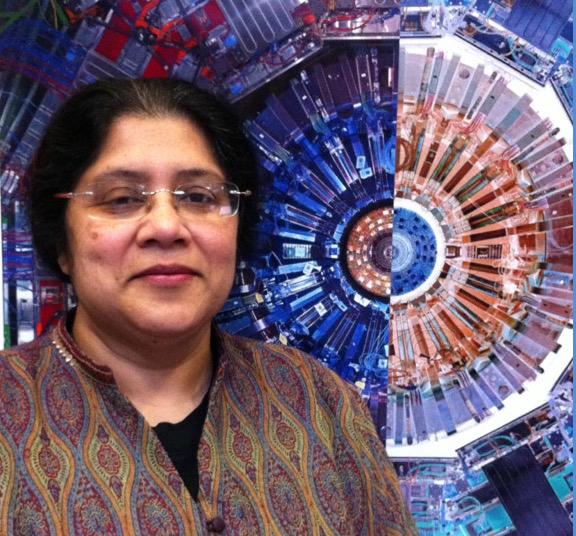
Narain was deeply involved with the Compact Muon Solenoid (CMS) experiment at the Large Hadron Collider particle accelerator at CERN in Switzerland, as well as the DØ experiment at Fermilab, the U.S. Department of Energy’s particle physics and accelerator laboratory. In an “In Memoriam” tribute published by Fermilab, the United States leadership team on the CMS experiment noted that Narain’s “impact on CMS has been immeasurable and her many contributions have been critical to the success of the collaboration.” Narain had served as a member of the CMS Management Board as the U.S. regional representative, chair of the U.S. CMS Collaboration, and a leader of the CMS group from Brown. She was also a founding chair of the CMS Diversity Office and a leader of the CMS Women’s Forum.
Narain was a strong and persistent advocate for diversity and inclusion in physics at Brown and well beyond. She served as a member of the CMS Task Force on Diversity and Inclusion and engaged in STEM outreach activities to encourage the participation of young women in science. She organized multiple Conferences for Undergraduate Women in Physics at Brown, and was a mentor and faculty advisor of the Department of Physics’ Women in Science and Engineering group.
Janet Blume, deputy provost and an associate professor of engineering, worked with Narain since her arrival at Brown — first as fellow women physical sciences faculty in the University’s Barus and Holley building.
“Meenakshi was a strong voice for women and underrepresented minorities in physics and was committed to making it a field that is free of barriers,” Blume said. “She worked toward that goal as tirelessly as she did her amazing research program. She showed incredible generosity in mentoring individual physicists at all levels, providing encouragement, tutelage and an exemplary role model. I know there are countless physicists who point to Meenakshi as the person to whom they owe their success.”
Narain was also the organizer and founder of the Big Bang Science Fair at WaterFire Providence, a public outreach event that brought hands-on science experiences to local kids and community members.
“Meenakshi had the inner strength and focus to develop a wide network of people who would work together, excited by her vision, to make possible some major accomplishment,” said Brown Professor Emeritus of Physics David Cutts, a longtime colleague. “An example is the Big Bang Science Fair at WaterFire, which pulled together contributions from the sciences and arts to spectacular success. To see what one could do through one’s will was inspiring not only to those she mentored, but also to many others whom she touched.”
Professor of Physics Ian Dell’Antonio said that as an undergraduate advisor, he’s met many students who Narain mentored: “It’s remarkable how many students would say that they would not have succeeded in physics except for her mentorship,” he said. “Meenakshi had this great ability to make people feel heard and valued. She would take students in their first or second year under her wing and make sure they got the encouragement, advice — and sometimes talking to — they needed to succeed. Her students are fiercely devoted to her.”
Dell’Antonio added that Narain worked ceaselessly to promote physics well beyond the academic community.
“She was also constantly looking for ways to promote other public-facing aspects of physics,” he said. “In particular, she was a huge supporter of Ladd Observatory and its public engagement, and was constantly pushing me and the other astronomers to be more visible.”
Blume noted that Narain took on the role of chair of the Department of Physics this year, despite existing responsibilities that included research, leadership in worldwide physics communities, and a devotion to teaching and mentoring. In her short time as department chair, Narain was exceptional, Blume said.
“Being chair of any department is a challenge, but it is an especially complex role in a department like physics, with its ambitious and successful research agenda, sophisticated laboratories, high levels of external funding, multiple degree programs, and wide ranges of courses,” Blume said. “Meenakshi welcomed the challenge — even while facing health challenges — and took a calm, methodical and thoughtful approach. Any chair has to work with department faculty, staff and students, but also the University administration. Meenakshi managed to be an outstanding partner to all. She was one of a kind and will be terribly missed.”
Narain’s work earned her a wide array of accolades throughout her career. In 2000, she received both an Outstanding Junior Investigator Award from the U.S. Department of Energy and a National Science Foundation Early Career Development Award. In 2007, she was elected a fellow of the American Physical Society. And in 2012, she was elected a fellow of the LHC Physics Center at Fermilab. Recently, Narain served on the Department of Energy’s High Energy Physics Advisory Panel, and she was just chosen as a member of the panel’s P5 subpanel, which will advise the U.S. government on priorities for the field.
Narain earned a bachelor of science from Gorakhpur University in India; a master of science in physics from Indian Institute of Technology, Kanpur, India, which recently awarded her a distinguished alumna award; and a Ph.D. in physics from the State University of New York at Stony Brook.
Narain is survived by her husband — Ulrich Heintz, a fellow professor of physics at Brown — and sons Aneesh and Anand Heintz.
This story includes reporting from a Department of Physics tribute to Meenakshi Narain, which is available in full on the department’s website.
-
Chung-I Tan
Professor EmeritusProfessor Tan was a theoretical high-energy physicist. His research focused on non-perturbative consequences of quantum chromodynamics and gauge/string duality.